
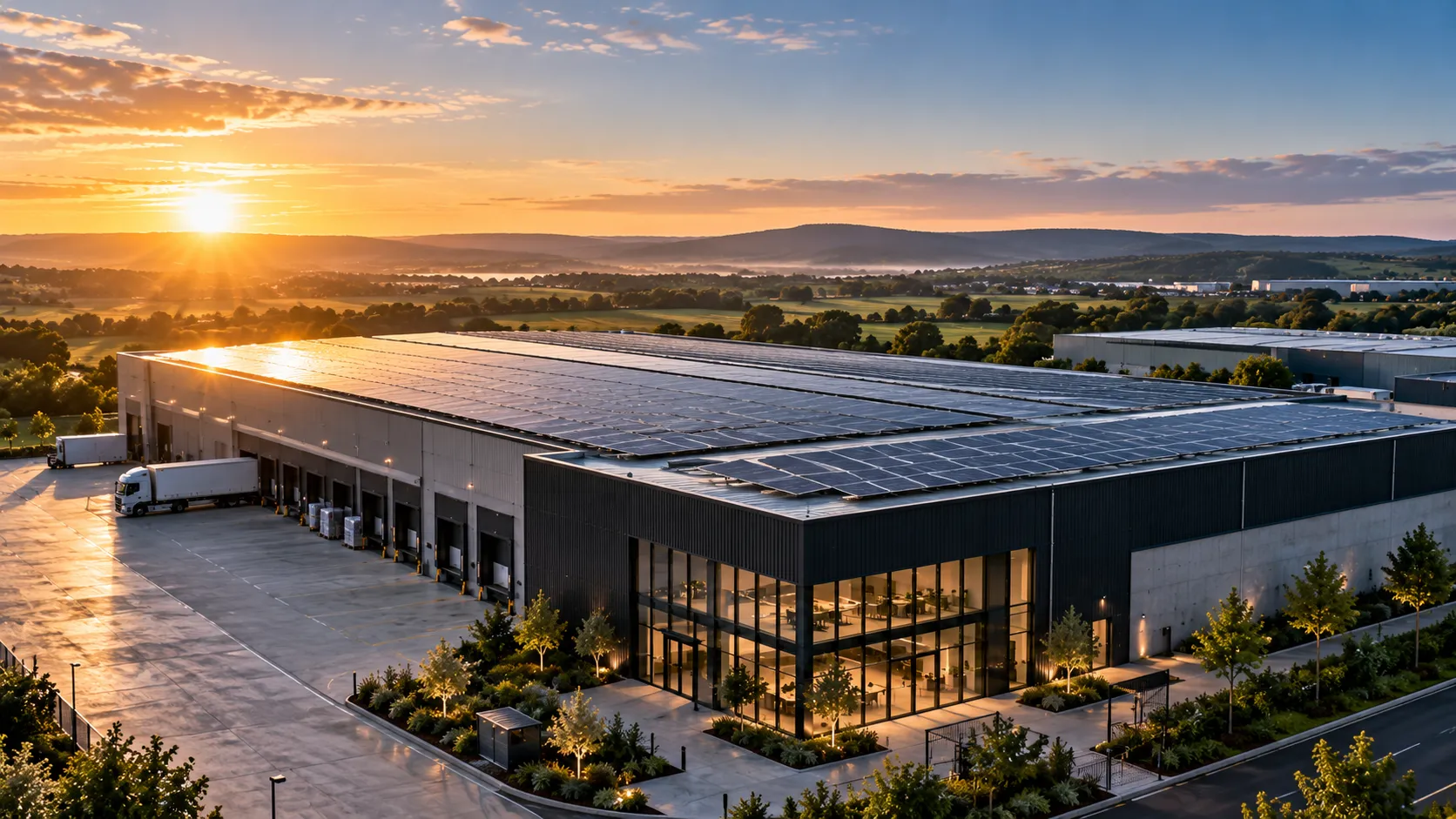
Commercial solar & energy infrastructure
Design the commercial energy system around the site — not the product catalogue.
Feasibility, system design, DNO coordination, installation and performance support for UK businesses.
START WITH SITE INTELLIGENCE
The fastest route to a useful commercial proposal is better input data.
Before array size or hardware, establish how the site uses energy, what the building can support and what the grid will allow.
01Energy profile
Half-hourly or interval data shows when electricity is used, not just how much. That changes self-consumption, battery value and the commercial model.
02Site + structure
Usable roof area, access, condition, structural constraints and operational restrictions determine what can actually be built.
03Grid + future load
Existing supply, generation, EV charging, batteries and planned expansion should be considered together before the equipment schedule is fixed.
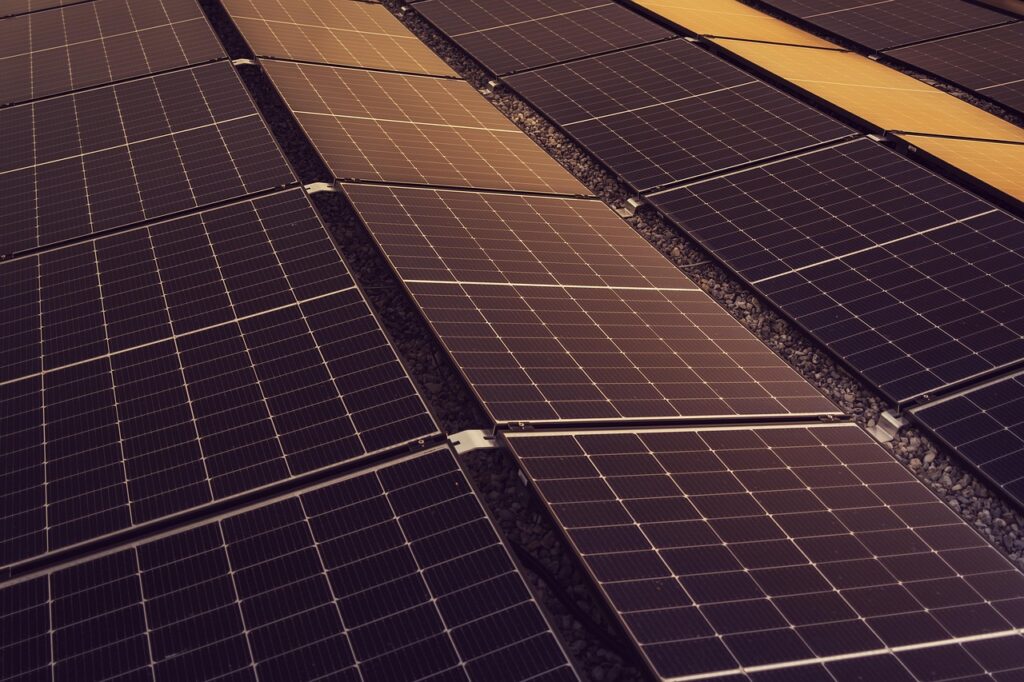
COMMERCIAL FEASIBILITY
Five engineering gates before a commercial system becomes an installable project.
The commercial proposal should move through these gates in sequence so roof space, load, grid and project economics stay connected.
RELATED TECHNICAL GUIDANCE
Commercial solar ROI: assumptions behind payback →
G98, G99 and G100: connection routes explained →
FEASIBILITY INPUTS
Bring the site data before the equipment list.
A useful first-stage commercial assessment needs enough information to understand demand, electrical constraints and the delivery environment. Better inputs produce a more defensible design and financial model.
DELIVERY RISK
The risks worth resolving before installation day.
Commercial projects become difficult when the electrical design, roof, grid route and site operations are treated as separate conversations. The proposal should surface these constraints early.
DECISION-READY PROPOSAL
Make the assumptions easy to audit.
A commercial proposal should separate measured inputs, design assumptions and projected outcomes so the business can challenge the model before approving the project.
Inputs
Demand data, tariffs, roof or site information and known electrical constraints.
Design
System size, layout, inverter or storage approach, grid route and integration requirements.
Economics
Generation assumptions, self-consumption, export value and the inputs used in the payback model.
COMMON QUESTIONS
Questions worth answering before the equipment is fixed.
What data makes a commercial solar assessment more useful?
Recent electricity bills, half-hourly consumption data where available, supply details, operating hours and known future loads give the design and financial model a stronger starting point.
Can a commercial system be sized from roof area alone?
Not responsibly. Roof area shows physical opportunity, but demand profile, export assumptions, electrical capacity, grid requirements and site operations can all change the sensible system size.
How should commercial payback be presented?
The model should separate measured inputs from assumptions and make tariff, self-consumption, export value, generation and finance assumptions visible so the result can be challenged.
VISUAL CONTEXT
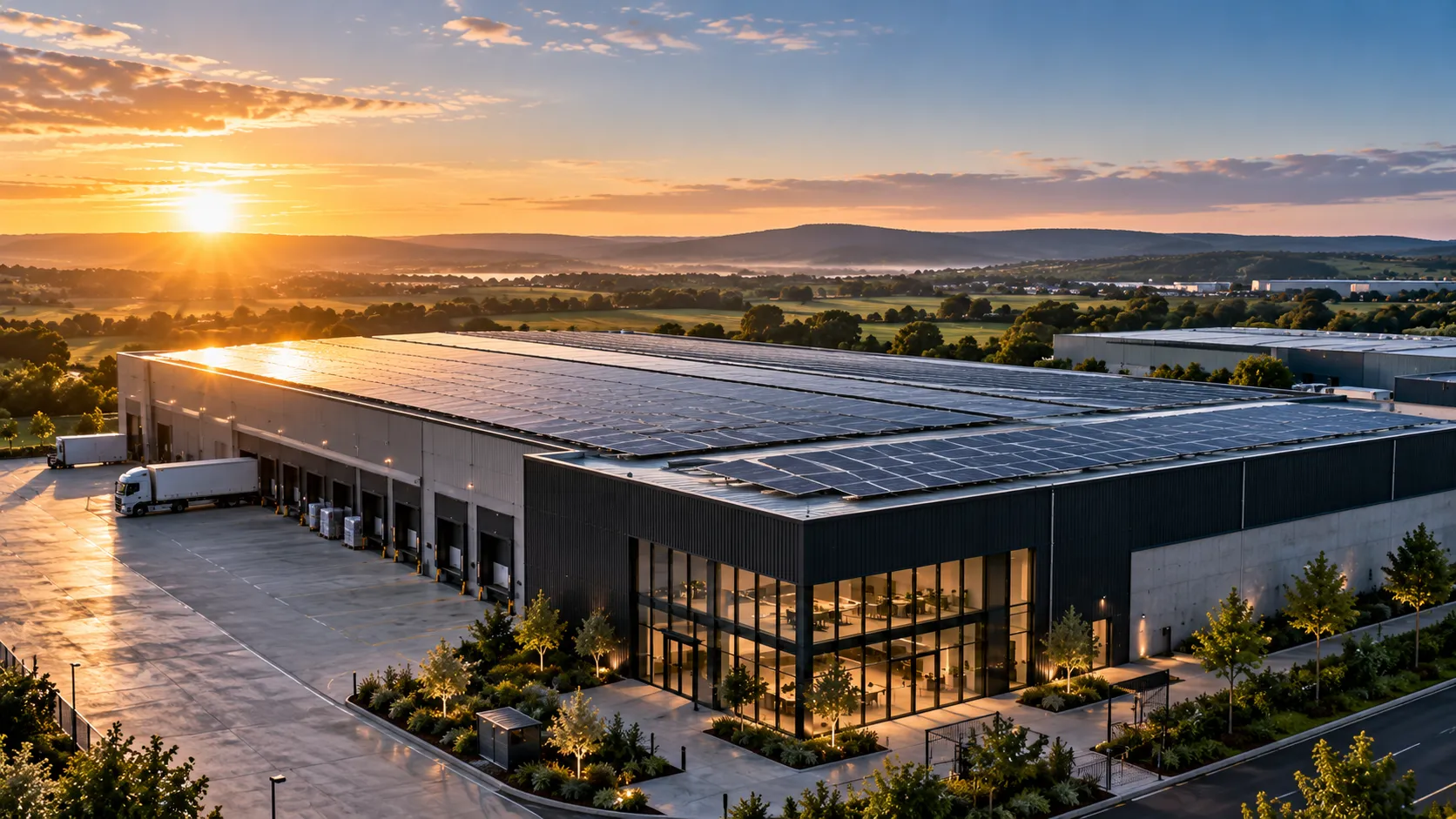
Commercial energy design starts with the site and electrical infrastructure.
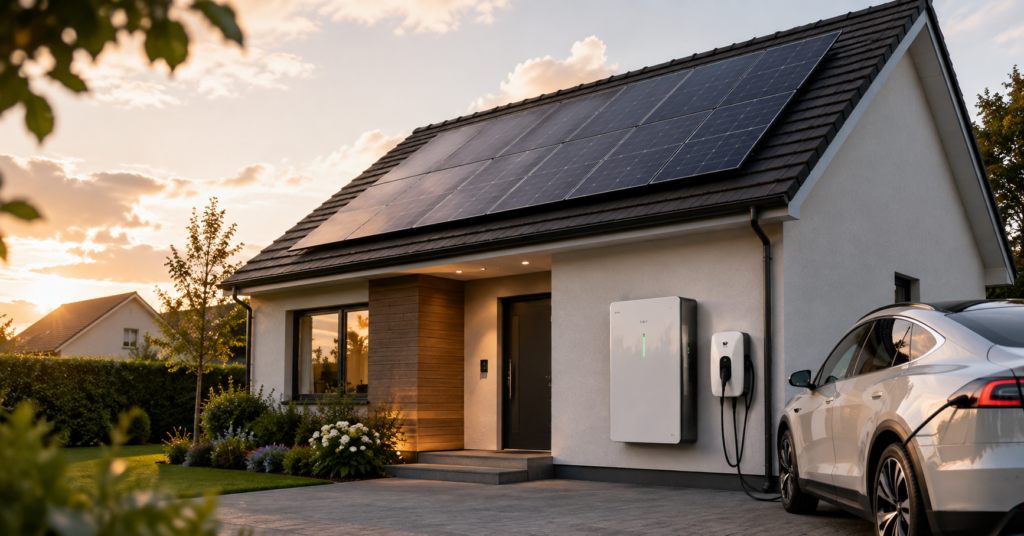
Three decisions to settle before procurement.
Commercial solar and storage design should use real site constraints and explain the business assumptions behind the recommendation.
When does the business use power?
Meter data, opening hours, planned expansion and demand peaks inform PV, battery and EV charging options.
What can safely be installed?
Review roof or land suitability, electrical distribution, site access, shutdown constraints and DNO requirements.
What drives the result?
Projected generation, self-consumption, tariff assumptions, export value and scope exclusions should be clear in any ROI model.
CONNECTED ENERGY SYSTEM
Move between the parts of the system without starting over.
Solar generation, storage, EV charging and grid constraints affect each other. Use these routes to keep the project connected.
Book a commercial survey
Tell us what you are planning and we will route the enquiry to the right next step.