

Home solar, batteries & EV charging
A home energy system designed around when you actually use electricity.
Clear solar and battery advice, careful installation and responsive aftercare for homeowners.
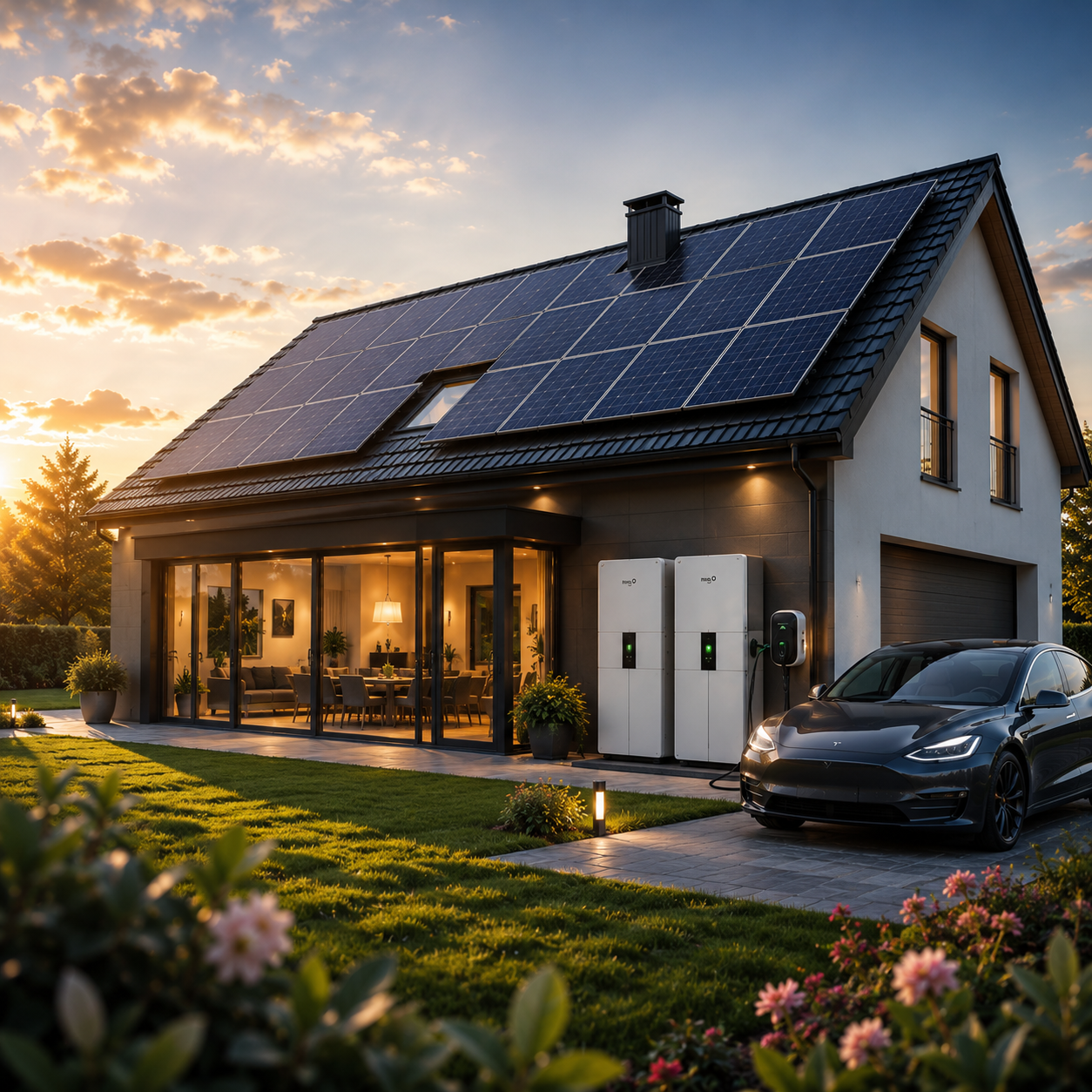
MAKE THE HOME PROFILE VISIBLE
A better home system starts with how the household actually uses electricity.
Two similar roofs can need different systems because the useful answer depends on demand timing, future loads and what the homeowner wants the battery or solar to do.
01When do you use energy?
Daytime use, evening demand and overnight baseload affect how much solar is consumed directly and how storage may be used.
02What is the battery for?
Solar self-consumption, tariff shifting and resilience are different objectives. Define the job before choosing the capacity.
03What changes next?
An EV, heat pump, extension or changing occupancy can materially alter demand. A useful design leaves room for known future changes.
QUICK HOME CHECK
What might your home system need?
Start with roof and usage.
A survey should validate roof potential, shading, electrical route and actual consumption before equipment is fixed.
Get a home quoteStandard home setups
Three starting points. One tailored design.
Compare these example solar, battery and EV configurations, then ask for a design around your roof and electricity use. Panel make, wattage and inverter rating are confirmed in the proposal, not assumed from the panel count.
Example 01 / Solar + storage
10 panels + EP6
A 10-panel starting point with the smaller of the two battery options.
- Solar array
- 10 PV panels
- Battery
- Fox ESS EP6
- Nominal battery energy*
- 5.76 kWh
- EV charging
- Fox EV charger
Example 02 / More storage
10 panels + EP12
The same panel count paired with the larger EP12 battery option.
- Solar array
- 10 PV panels
- Battery
- Fox ESS EP12
- Nominal battery energy*
- 11.52 kWh
- EV charging
- Fox EV charger
Example 03 / More panels
16 panels + EP12
A 16-panel starting point paired with the EP12 battery option.
- Solar array
- 16 PV panels
- Battery
- Fox ESS EP12
- Nominal battery energy*
- 11.52 kWh
- EV charging
- Fox EV charger
Example scope: Fox EV charger, bird protection and one scaffolding elevation, as shown in these package configurations. The exact charger model, installation works, roof access and any additional scaffolding are confirmed in the site-specific proposal.
01Panel choices and inverter specification
Prefer a different panel specification? Ask for a tailored version of one of these setups. Panel manufacturer, model, individual wattage, total array kWp and inverter rating must be stated in the proposal. The reference packages do not identify the panel model or inverter rating, so these examples do not assume either.
02Battery capacity: nominal is not usable
The package artwork rounds the EP6 and EP12 figures to 5.8 kWh and 11.5 kWh. Fox ESS specifies 5.76 kWh and 11.52 kWh nominal energy respectively. Usable energy, power limits, reserve settings and exact inverter compatibility need confirming for the final system.
03A starting point, not a system recommendation
These are example configurations, not completed-project records or a quotation. Roof layout, shading, electricity use, planned loads and the grid connection determine the final design. No generation, savings, payback or backup capability is implied by a panel count or battery size.
*Nominal battery figures checked against Fox ESS UK EP battery specifications on 27 September 2026. Configuration references: Quantum Solar 10-panel EP6, 10-panel EP12 and 16-panel EP12 package specifications.
Sizing factors
What we should ask before recommending equipment.
Annual electricity use, roof orientation and shading, daytime versus evening demand, current tariff, planned EV or heat pump and the role you want a battery to play.
What happens next
A simple route from postcode to handover.
Quick qualification, survey and design, installation and commissioning, then monitoring guidance, documentation and a clear aftercare route.
HOME SYSTEM LOGIC
Size the system around the household, not the brochure.
The design should connect roof potential, household demand, tariff behaviour and future loads before panel or battery quantities are fixed.
Current-reference links: HMRC VAT Notice 708/6 · Ofgem Smart Export Guarantee. Tax and tariff terms can change.
BEFORE WE RECOMMEND EQUIPMENT
Five things that change a home solar and battery design.
The useful answer is rarely “how many panels fit?”. A better design starts with how the home behaves, then works back to the equipment.
Battery sizing comes after the objective. A battery used mainly to increase solar self-consumption is a different design problem from one intended to shift tariff periods or support higher evening demand.
SURVEY OUTPUT
What a survey should settle before you decide.
The survey should turn assumptions into decisions: what can be installed, where equipment can go, what needs checking with the network and what the generation estimate is based on.
HANDOVER & AFTERCARE
Handover should make the system understandable.
A completed installation is only useful if the homeowner knows how to read it, monitor it and get help when something does not look right.
Commissioning
Confirm the system is operating as intended and explain the key indicators before the job is closed.
Monitoring
Show where generation, battery state and import or export information can be viewed where the installed equipment supports it.
Documentation
Keep the relevant design, commissioning and equipment information together so future support is easier.
COMMON QUESTIONS
Questions worth answering before the equipment is fixed.
How many solar panels does a home need?
There is no useful panel-count answer without the roof and energy-use context. The array should be sized around usable roof area, generation assumptions, household demand and the wider electrical design.
Do I automatically need a battery with solar?
No. A battery should solve a defined objective such as increasing solar self-consumption or shifting energy between tariff periods. Its usable kWh and kW capability both matter.
Will the grid connection affect a home system?
It can. The applicable connection route depends on the generating equipment and proposed site behaviour, so the grid step should be checked as part of the design rather than after hardware is chosen.
HOME ENERGY IN CONTEXT
See how a home solar and battery system comes together.

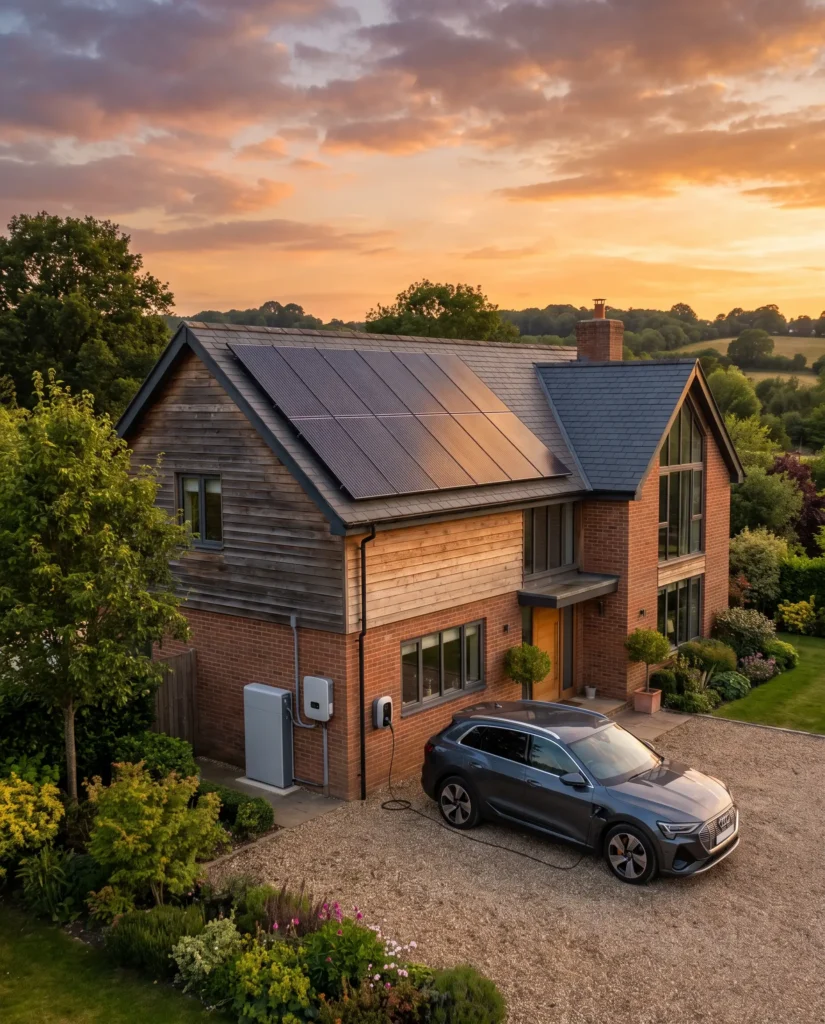
CONNECTED ENERGY SYSTEM
Move between the parts of the system without starting over.
Solar generation, storage, EV charging and grid constraints affect each other. Use these routes to keep the project connected.
Get my solar quote
Tell us what you are planning and we will route the enquiry to the right next step.